Having high blood pressure does not automatically mean you cannot donate blood.
Many people living with hypertension can donate safely when their condition is controlled and they meet the blood donation service's eligibility requirements.
However, there is an important difference between having a history of high blood pressure and arriving at a donation centre with a blood pressure reading that is too high. Your current reading, overall health, medication, and any related medical conditions can affect the decision.
If you have hypertension and want to help someone in need, understanding these factors can help you prepare for the screening process and avoid unnecessary risks.
The short answer: Yes, many people with high blood pressure can donate blood, but the final decision depends on the donor assessment and the rules of the collection service.
Can BP Patients Donate Blood?
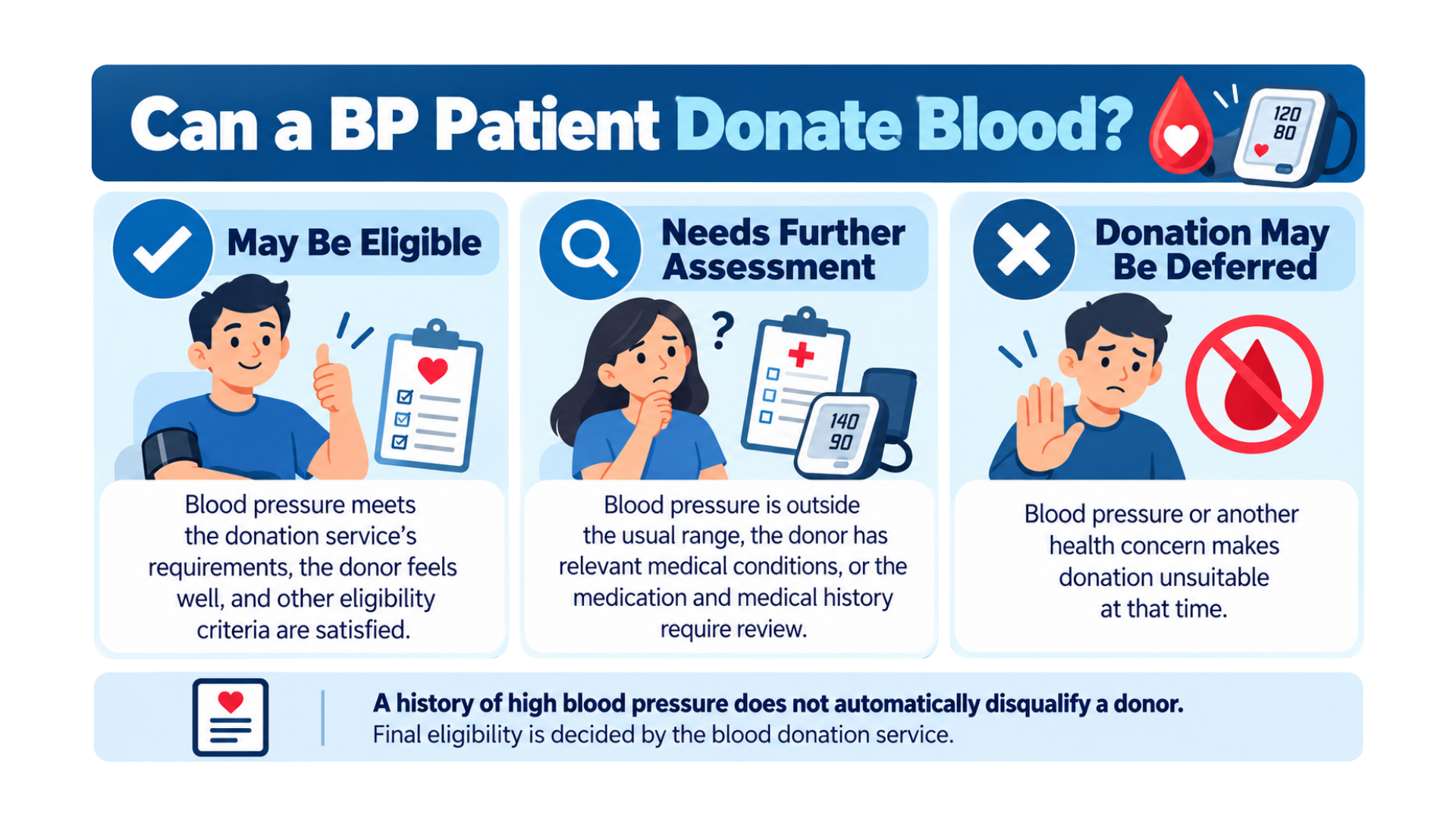
Yes, people with high blood pressure may be eligible to donate blood if their condition is stable, they feel well, and their blood pressure meets the donation centre's requirements.
For example, the American Red Cross generally accepts donors with high blood pressure when their reading is no higher than 180/100 mmHg at the time of donation, provided they feel well and meet the other eligibility criteria. Blood pressure medication alone does not automatically disqualify a donor. These are American Red Cross criteria, not universal rules for every country or blood collection service.
A donation centre may assess the following factors before allowing you to donate:
- Your blood pressure reading on the day of donation.
- Whether your hypertension is controlled.
- Whether you feel well and have any concerning symptoms.
- The medicines you take and the condition for which they were prescribed.
- Other medical conditions that could affect donation safety.
- The blood donation service's local eligibility rules.
A previous diagnosis of hypertension does not necessarily prevent donation. Equally, having a history of acceptable readings does not guarantee that you will be eligible on every visit.
What Blood Pressure Is Acceptable for Blood Donation?
There is no single blood pressure threshold that applies to every blood donation service worldwide. Each service follows its own eligibility standards and screening procedures.
The American Red Cross lists a maximum blood pressure of 180 mmHg systolic and 100 mmHg diastolic for eligible donors. A reading above the service's limit may result in temporary deferral or a recommendation to seek medical assessment.
To understand your reading, it helps to know what the two numbers mean:
Systolic pressure
The top number, which measures the pressure in your arteries when your heart beats.
Diastolic pressure
The bottom number, which measures the pressure when your heart rests between beats.
For example, a reading of 140/90 mmHg means the systolic pressure is 140 and the diastolic pressure is 90.
Do not use another country's donation threshold as permission to donate at your local centre. A reading that meets one organisation's criteria may be assessed differently by another.
Blood Pressure Readings and Donation Decisions
| Situation | What it may mean for donation |
|---|---|
| BP is within the donation service's acceptable range and you feel well | You may be eligible, subject to other checks |
| BP is higher than the service's limit | Donation may be deferred |
| BP is unusually low and you feel dizzy or weak | Donation may not be appropriate that day |
| BP fluctuates or is difficult to control | Seek medical advice and ask the donation service about eligibility |
| You have high BP and take prescribed medication | Medication alone may not prevent donation; screening is still required |
These examples are general guidance, not a substitute for the screening decision made at your donation centre.
Can You Donate Blood While Taking BP Medicine?
In many cases, yes. Taking medication for high blood pressure does not automatically make you ineligible to donate blood.
The American Red Cross specifically states that medication for high blood pressure does not, by itself, disqualify a donor. Eligibility also depends on the donor's health and the reason the medicine was prescribed.
If you take medication for hypertension, follow these precautions:
1. Continue your prescribed medication as directed
Never skip a dose or stop treatment just to qualify for blood donation.
2. Tell the screening staff which medicines you take
Include the names and doses if you know them.
3. Explain any recent medication changes
A recent change may be relevant if your blood pressure is not yet stable.
4. Mention any side effects
Dizziness, faintness, or weakness should be discussed before donating.
5. Ask if you are unsure
The donation service can assess whether your medication and health history meet its requirements.
The medicine itself is only part of the assessment. The condition being treated and your current health may also matter.
Is Blood Donation Safe for People With High Blood Pressure?
For many people whose hypertension is controlled, blood donation can be possible after the required screening. However, donating blood temporarily reduces the amount of blood circulating in the body, so some donors may experience light-headedness, dizziness, or fainting.
The main concern is not simply whether a person has ever had high blood pressure. It is whether donating blood is appropriate given their current reading and overall health.
Consider these situations:
1. Your Blood Pressure Is Very High on Donation Day
If your reading is above the donation service's acceptable limit, do not try to push through the screening. Follow the staff's advice and seek medical assessment when appropriate.
A markedly high reading, particularly with symptoms such as chest pain, severe breathlessness, sudden weakness, or confusion, needs urgent medical attention rather than a blood donation appointment.
2. You Feel Dizzy or Weak
Dizziness and weakness can make donating blood less appropriate, even if you have previously had acceptable blood pressure readings. Tell the screening staff about these symptoms before donation.
3. You Have Other Medical Conditions
Hypertension may occur alongside heart disease, kidney disease, diabetes, or other conditions. These do not all have the same eligibility rules, so the donation service needs to assess your circumstances rather than relying on your BP reading alone.
4. Your Blood Pressure Is Not Yet Stable
If your treatment has recently changed or your readings have been repeatedly high, speak with your healthcare professional before arranging a donation.
Does Donating Blood Lower High Blood Pressure?
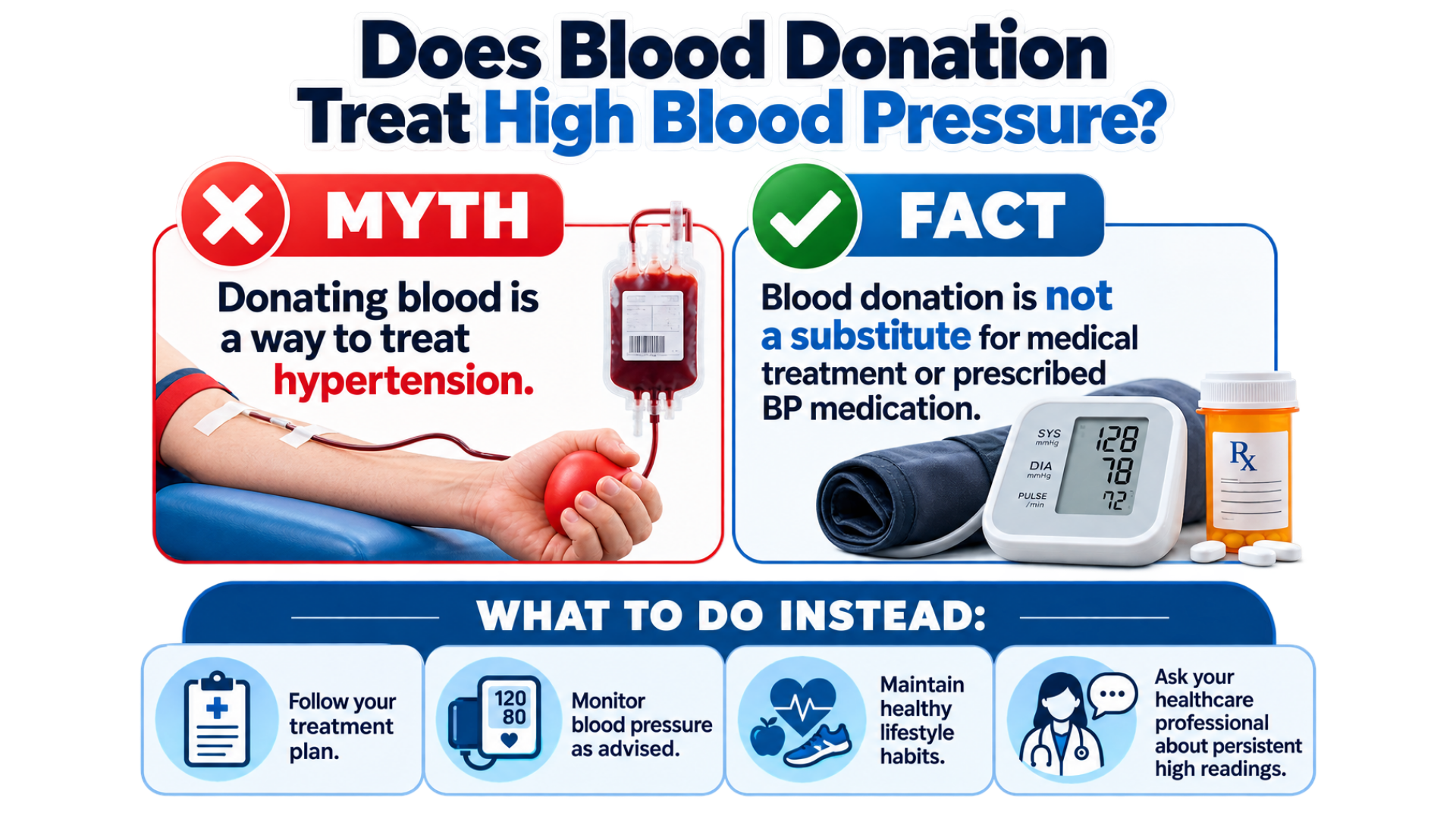
Blood donation should not be used as a treatment for high blood pressure.
Although blood donation removes a portion of circulating blood, any short-term changes in blood pressure do not make it a reliable or recommended way to manage hypertension. Your blood pressure may vary with hydration, stress, activity, medication, and other factors.
If your goal is to lower your blood pressure, follow a treatment plan recommended by your healthcare professional. Depending on your situation, that plan may include prescribed medication, dietary changes, regular physical activity, and monitoring your readings.
Do not donate blood more frequently in an attempt to lower your BP. Donate only when you are eligible and within the collection service's recommended donation intervals.
What Should BP Patients Do Before Donating Blood?
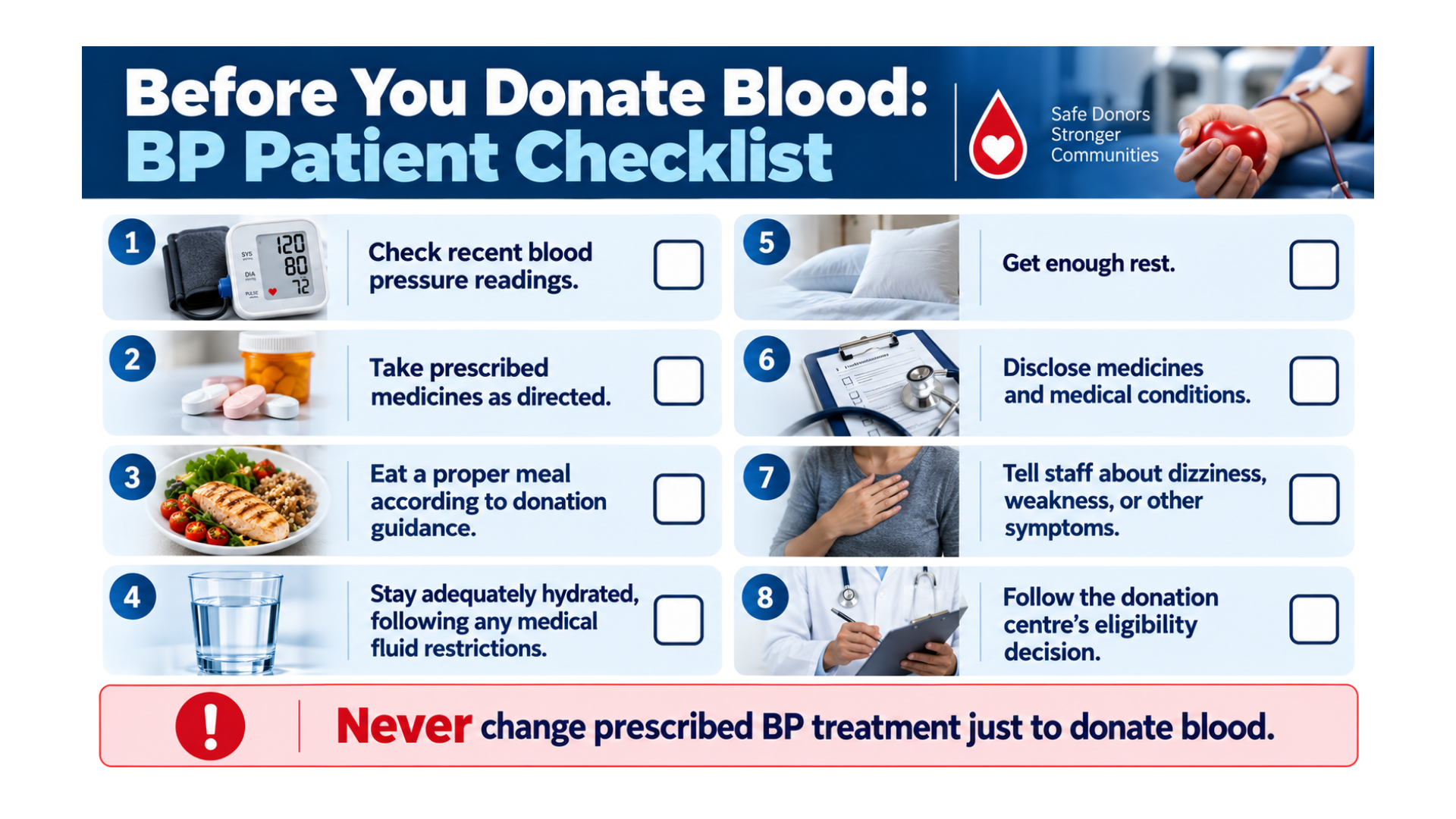
If you have hypertension and want to donate blood, a little preparation can help you make an informed decision and complete the screening process more smoothly.
1. Know Your Recent Blood Pressure Readings
If you monitor your BP at home, review your recent readings. Repeatedly high readings are a reason to seek medical advice rather than relying on one measurement at a donation centre.
Remember that the reading taken on donation day is important, and the collection service will apply its own criteria.
2. Take Your Prescribed Medication as Directed
Do not stop, reduce, or change your medication to meet a donation threshold. If you have questions about your medicines, consult your healthcare professional or the donation centre before donating.
3. Eat and Drink Appropriately
Follow the donation centre's preparation instructions. In general, donors should eat a proper meal, drink adequate fluids, and avoid arriving dehydrated. If you have been given fluid restrictions because of a medical condition, follow your clinician's advice rather than increasing fluid intake without guidance.
4. Get Enough Rest
Arrive well-rested and avoid strenuous exercise immediately before donation. If you feel unwell, dizzy, or unusually weak, tell the screening staff and consider postponing your appointment.
5. Share Your Medical History Honestly
Tell the donation staff about hypertension, your medicines, recent changes in treatment, and any other relevant medical conditions. Accurate information helps them assess your eligibility and protect your health.
What Happens During Blood Donation Screening?
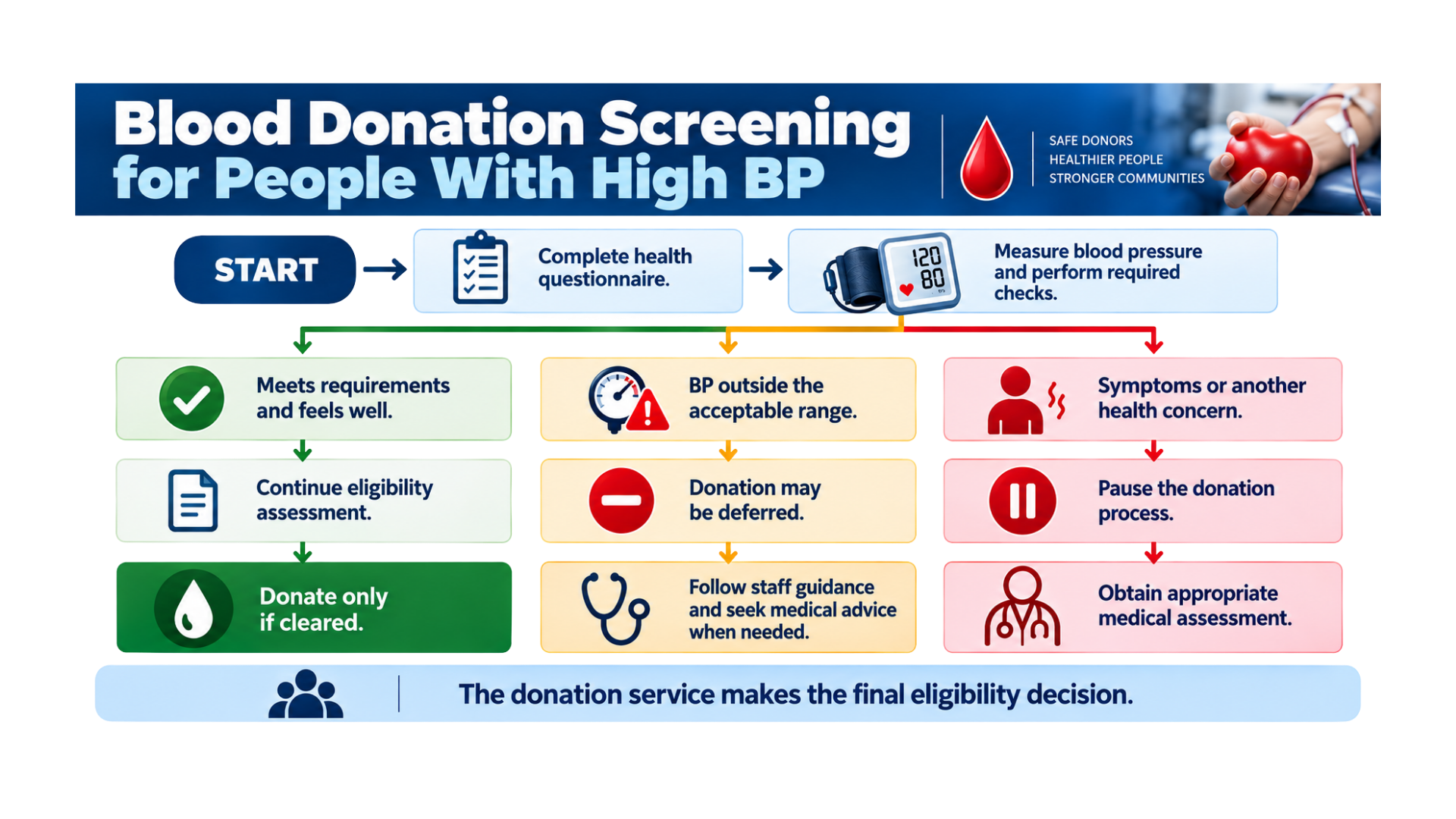
Blood donation screening is designed to determine whether donating is suitable for you on that day. The exact process varies by service, but it commonly includes a health questionnaire and checks such as blood pressure, pulse, and haemoglobin.
For a person with hypertension, the process may involve the following steps:
1. Registration and health history
You provide information about your medical conditions, medication, and general health.
2. Blood pressure measurement
Staff check whether your reading meets the service's criteria.
3. Other screening checks
The centre may check your pulse, haemoglobin, and other eligibility factors.
4. Eligibility decision
Staff decide whether you can proceed, need further assessment, or should postpone donation.
5. Donation and aftercare
If eligible, you donate and follow the staff's instructions for recovery.
If your blood pressure is outside the permitted range, being deferred does not necessarily mean you can never donate. You may be able to try again after the issue has been assessed or resolved, depending on the donation service's rules.
Can a Person With Both High Blood Pressure and Diabetes Donate Blood?
Having both hypertension and diabetes does not automatically determine whether someone can donate blood. Eligibility depends on the donor's overall health, the control of each condition, any complications, medication, and the donation service's rules.
If you have both conditions, tell the screening staff about them and follow any medical advice you have received. Do not assume that eligibility for one condition automatically means you are eligible with both.
The same principle applies if hypertension occurs alongside heart or kidney disease. These conditions may require additional assessment.
When Should a BP Patient Postpone Blood Donation?
Consider postponing your donation and seeking appropriate advice if:
- Your blood pressure is above the donation service's permitted limit.
- You feel dizzy, faint, weak, or unwell.
- Your BP has been repeatedly high or is not well controlled.
- Your medication has recently changed and your condition is unstable.
- You have a new or worsening medical problem.
- Your healthcare professional has advised you not to donate.
If you experience chest pain, severe shortness of breath, sudden weakness, confusion, or other potentially serious symptoms, seek urgent medical attention. Do not go ahead with a donation while experiencing these symptoms.
Frequently Asked Questions
Can a person with high BP donate blood?
Yes, many people with high blood pressure can donate if they feel well, meet the donation service's blood pressure requirements, and satisfy all other eligibility criteria. A diagnosis of hypertension alone does not automatically disqualify a donor.
Can I donate blood if I take BP tablets every day?
Often, yes. Taking prescribed blood pressure medication does not automatically prevent blood donation. Your current health, the reason for the medication, and the collection service's rules still matter. Never stop your medicine to qualify.
What if my blood pressure is high on the day of donation?
The donation centre may defer your donation if your reading is above its permitted limit. Follow the staff's guidance and seek medical advice if your reading is repeatedly high or concerning.
Does donating blood reduce high blood pressure permanently?
No. Blood donation is not a proven substitute for hypertension treatment and should not be used to manage high BP. Continue your prescribed treatment and follow your healthcare professional's advice.
Can a person with controlled hypertension donate blood?
They may be eligible if their blood pressure meets the collection service's requirements, they feel well, and they pass the other screening checks.
Can I donate blood if I have high BP and feel dizzy?
Do not proceed without informing the screening staff. Dizziness may indicate that donation is not appropriate at that time and may need medical assessment, particularly if it is new or severe.
Is there one blood pressure limit for blood donation worldwide?
No. Eligibility thresholds and procedures can differ between blood donation services and countries. Check the requirements of the centre where you plan to donate.
Conclusion
Having high blood pressure does not automatically mean you must avoid blood donation. Many people with controlled hypertension can donate when they feel well and meet the required eligibility criteria.
The most important steps are to know your health status, continue your prescribed medication, disclose your medical history, and allow the donation centre to assess your current blood pressure.
If your reading is too high or you have concerning symptoms, postpone donation and seek appropriate medical advice. Donating blood can help others, but it should always be done in a way that protects your own health.
Medical disclaimer
This article is for general educational purposes and is not a substitute for professional medical advice. Blood donation eligibility varies by country and collection service. Always follow the screening team's instructions and consult a qualified healthcare professional about your individual health circumstances.