Getting a tattoo doesn't automatically mean you can never donate blood.
But if you're planning to donate soon after getting inked, there's one important detail to check: how recently you got the tattoo and which eligibility rules apply to you.
Tattooing breaks the skin, which can create a risk of exposure to bloodborne infections if proper infection-control practices are not followed.
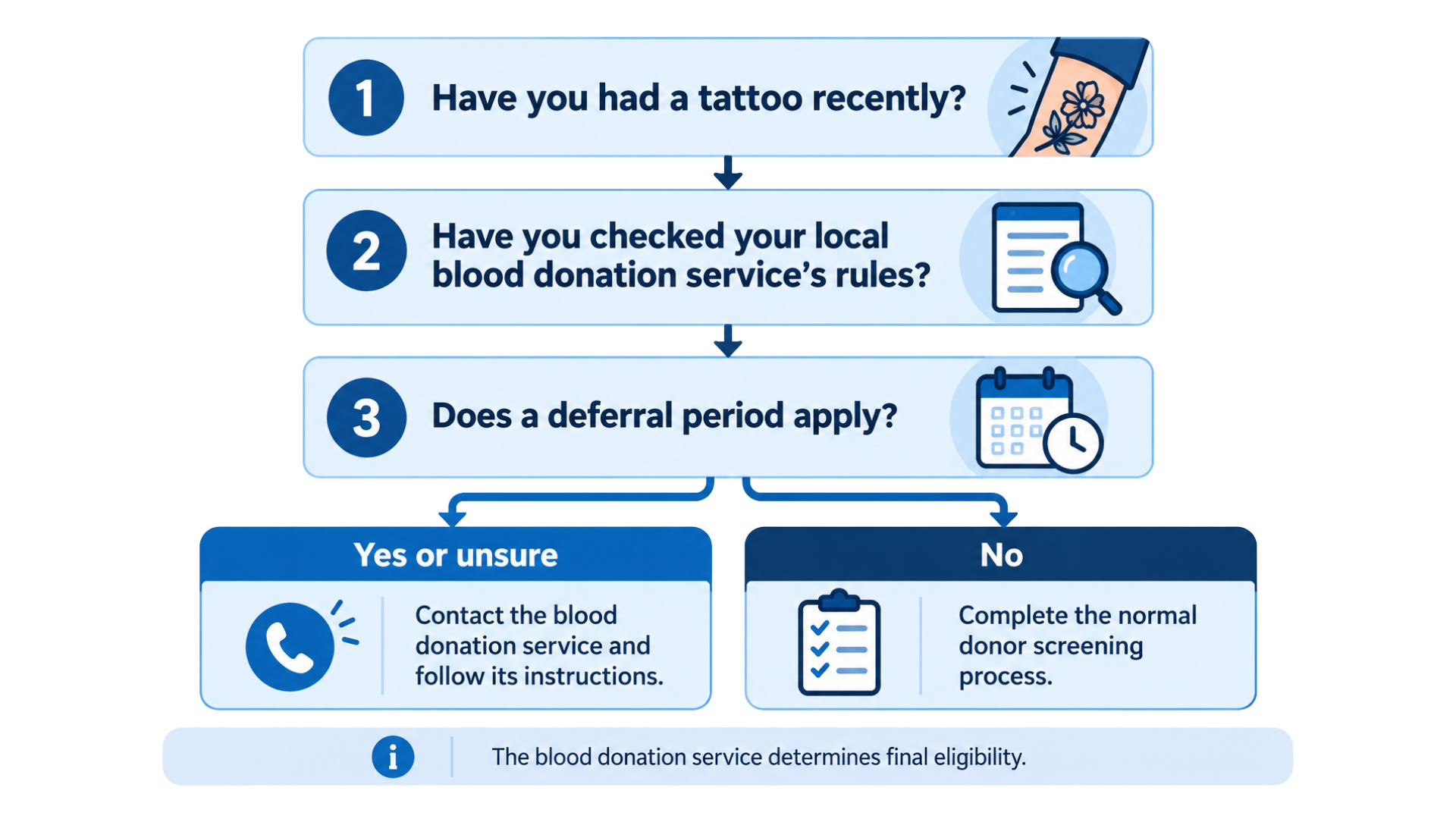
So, can you donate blood after getting a tattoo? In many cases, yes, but you may need to wait for a specified period before donating. That period varies by country and blood donation service.
Understanding the rules before booking an appointment helps you avoid an unnecessary trip and ensures you follow the correct donor-screening process.
Can You Donate Blood After Getting a Tattoo?
Yes, having a tattoo does not automatically make you permanently ineligible to donate blood. However, a recent tattoo may require you to wait before donating.
Blood donation services use donor-selection criteria to assess whether someone can safely donate. These criteria may consider recent procedures that break the skin, potential infection exposure and the person's overall health.
The waiting period is not universal. Some blood donation services specify a standard deferral period, while others consider factors such as the tattoo facility's regulatory status and the procedure's circumstances.
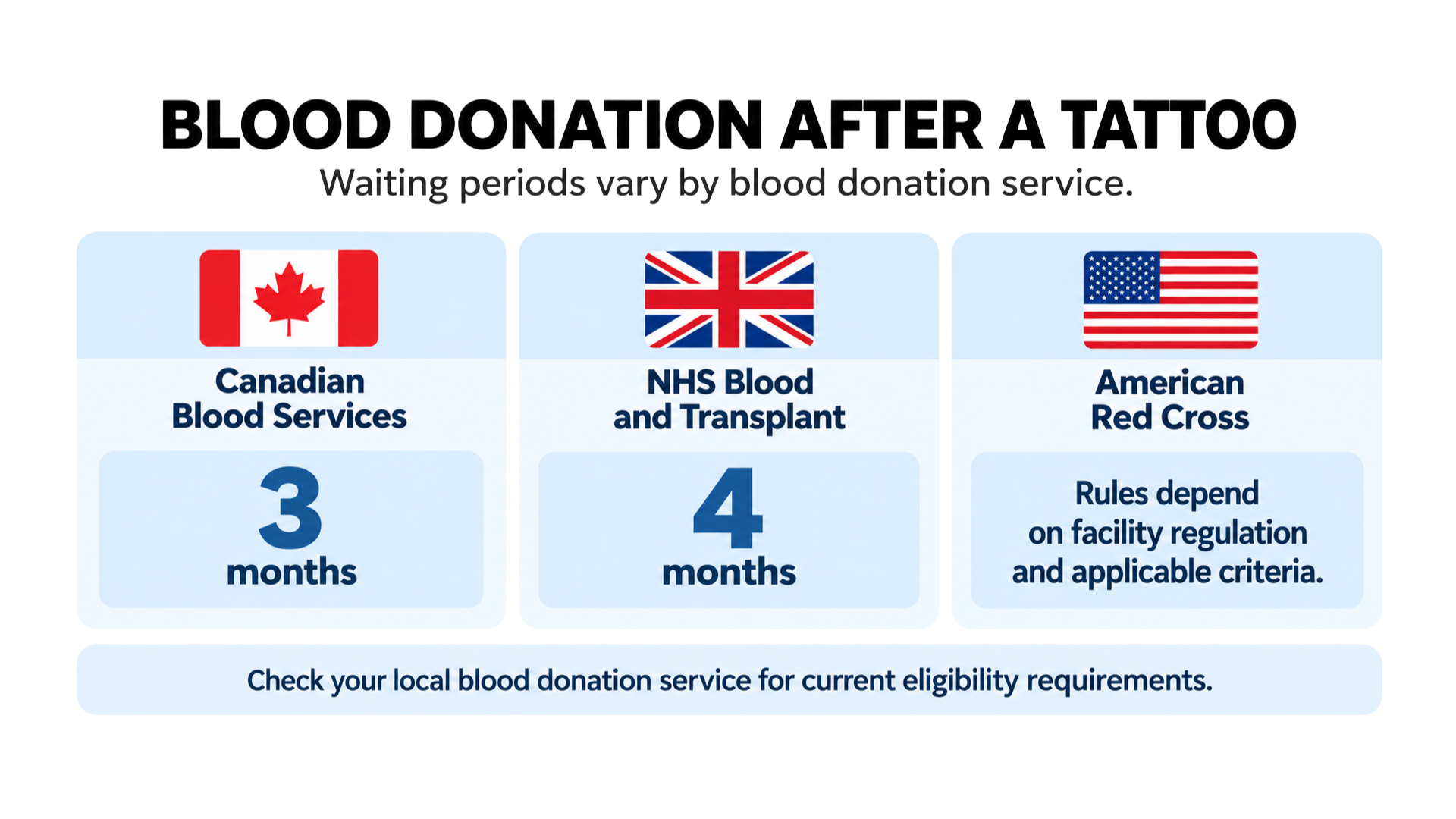
For example, Canadian Blood Services specifies a three-month waiting period after tattooing, while NHS Blood and Transplant guidance specifies four months. American Red Cross eligibility rules also distinguish between certain regulated and unregulated tattoo facilities.
Always check the current requirements of the service where you intend to donate.
How Long After Getting a Tattoo Can You Donate Blood?
The time you must wait depends on the blood donation service's current eligibility rules. There is no single waiting period that applies to every country or every tattoo procedure.
Different services use different criteria, so information published for one country may not apply to donors elsewhere.
| Blood donation service | Published guidance |
|---|---|
| Canadian Blood Services | Three months after a tattoo |
| NHS Blood and Transplant | Four months after a tattoo |
| American Red Cross | Eligibility depends on facility regulation and other applicable criteria |
Sources: Canadian Blood Services, NHS Blood and Transplant, and American Red Cross eligibility criteria.
What if you don't know whether the tattoo studio followed proper hygiene practices?
Tell the blood donation centre what you know about the procedure. If you are uncertain whether sterile, single-use equipment was used, disclose that uncertainty during screening.
Do not assume that a professional-looking studio automatically makes you eligible to donate immediately. The applicable donor-selection rules still determine whether a deferral is necessary.
Why Is There a Waiting Period After Getting a Tattoo?
Tattooing involves repeatedly puncturing the skin to deposit pigment. When infection-control practices fail, contaminated needles, equipment or materials can expose a person to bloodborne pathogens.
This is why blood donation services may temporarily defer donors after tattooing. The aim is to reduce the risk of transmitting an infection through donated blood.
1. Tattooing can create a route for bloodborne infections
The skin normally acts as a protective barrier. Tattoo needles penetrate that barrier, which means contaminated equipment or unsafe procedures can introduce infectious agents into the body.
Infections of concern include hepatitis B and hepatitis C, which can be transmitted through infected blood.
Proper hygiene, sterile equipment and single-use needles help reduce avoidable risks. However, the absence of visible problems does not prove that no exposure occurred.
2. Some infections may not be detectable immediately
Blood donation services screen donations for relevant transfusion-transmissible infections. Nevertheless, tests have limitations, particularly during the early period following an infection.
A person may not have symptoms and may not know that an infection has occurred. This is one reason donor-selection rules may include temporary deferral periods after certain procedures or exposures.
3. The waiting period helps protect blood recipients
Donated blood may be needed for people undergoing surgery, receiving cancer treatment or recovering from serious injuries.
Donor screening considers the safety of both the donor and the recipient. Deferral rules help blood services manage potential infection risks alongside laboratory screening and other safety procedures.

Does Getting a Tattoo at a Licensed Studio Change the Waiting Period?
It can, depending on the rules in your location.
A properly regulated tattoo studio should follow applicable infection-control requirements. The use of sterile needles, appropriate equipment handling and non-reused materials helps reduce the risk of exposure to bloodborne infections.
Some blood donation services consider the regulatory status of the tattoo facility when deciding whether a waiting period applies. Others specify a standard deferral period after tattooing.
For example, the American Red Cross distinguishes between tattoos performed in state-regulated facilities using sterile needles and non-reused ink and tattoos performed in states that do not regulate tattoo facilities.
This distinction should not be assumed to apply everywhere.
Before donating, check whether your local blood service requires a waiting period after all tattoos, whether facility regulation affects eligibility, and whether the circumstances of your procedure require additional assessment.
The tattoo studio can provide information about its procedures, but the blood donation service determines your donor eligibility.
Can You Donate Blood If You Have an Old Tattoo?
In many cases, yes. An old tattoo does not automatically disqualify someone from donating blood permanently.
If the applicable tattoo-related deferral period has passed, you may be eligible, provided you meet the other donor-selection requirements.
The age of the tattoo alone is not the only factor. Blood donation staff may also consider recent touch-ups, additional tattoo sessions, related procedures and your medical history.
For example, someone whose tattoo is several years old but who recently received a touch-up may need to follow the rules applicable to that more recent procedure.
Always disclose recent procedures during donor screening, even if they involved only a small amount of additional tattooing.
Can You Donate Blood After Getting a Tattoo If It Is Fully Healed?
A fully healed tattoo is a positive sign of skin recovery, but it does not automatically remove a required waiting period.
There are two separate considerations:
Skin healing
The tattooed area should not have signs of an active infection or an unresolved healing problem.
Donor eligibility
You must satisfy the blood service's applicable deferral criteria, even if the tattoo looks normal.
If the tattooed area develops increasing redness, swelling, warmth, pain or discharge, seek appropriate medical advice. Tell the blood donation centre about the symptoms and any treatment you receive.
Do not use the appearance of the tattoo as the only basis for deciding whether to donate.
Do Microblading and Permanent Makeup Affect Blood Donation?
They may. Procedures such as eyebrow microblading and permanent makeup involve introducing pigment into the skin, so some blood donation services apply tattoo-related eligibility rules to them.
The specific requirements vary by service. Canadian Blood Services, for example, includes microblading and permanent makeup in its three-month waiting-period guidance.
If you have recently undergone one of these procedures, check your local blood service's current criteria rather than assuming that cosmetic procedures are treated differently from conventional tattoos.
The same principle applies to other procedures involving needles or skin penetration: disclose the procedure and let qualified donor-screening staff determine your eligibility.
Other Blood Donation Eligibility Requirements
The tattoo-related waiting period is only one part of blood donor screening. You must also satisfy the other eligibility criteria used by your local blood donation service.
These may include:
Age and weight
Meeting the service's eligibility requirements.
General health
Being well enough to donate on the day of the appointment.
Medical history
Disclosing relevant medical conditions, infections and previous procedures.
Medications and treatment
Reporting medicines and recent treatments that may affect eligibility.
Previous donations
Following the required interval between donations.
Other potential exposures
Answering questions about recent travel, illnesses and other circumstances covered by donor-selection rules.
Requirements vary by location and donation type. Meeting a general age or weight requirement does not guarantee that you will be accepted as a donor.
The blood donation service's screening process is the appropriate way to establish your eligibility.
What Should You Do Before Donating Blood After a Tattoo?
A few practical steps can help you avoid confusion and prepare for your donation appointment.
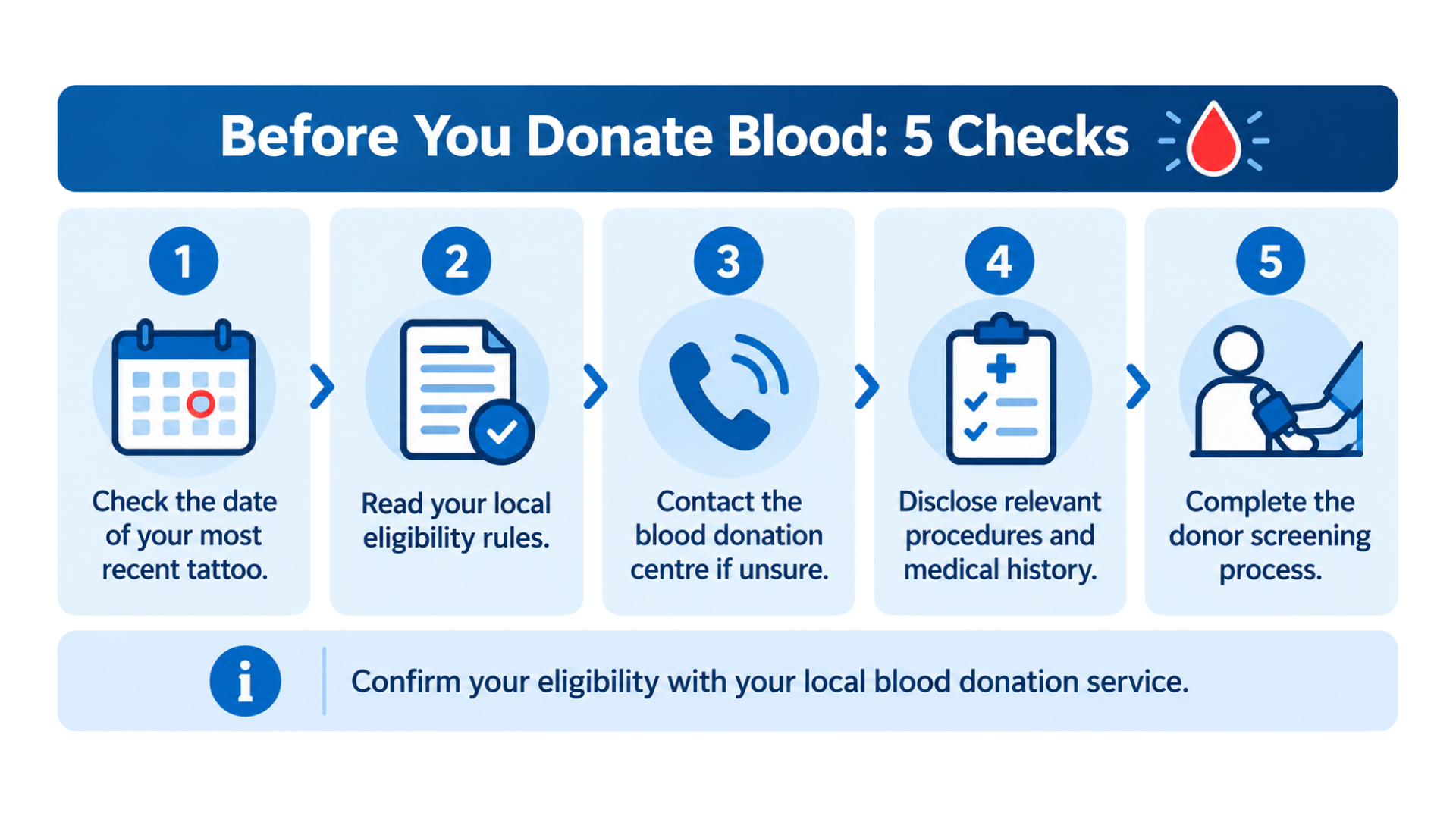
Step 1: Check when you received your tattoo
Use the date of your most recent tattoo session, including a touch-up if applicable. This gives the blood donation centre the information it needs to assess any waiting-period requirement.
Step 2: Check the current eligibility rules
Visit the official website of your local blood donation service. Look specifically for its guidance on tattoos, piercings, microblading and other procedures involving skin penetration.
Do not rely solely on a general article or information intended for another country.
Step 3: Contact the blood donation centre if anything is unclear
Explain when and where you received the tattoo and whether you know what equipment and procedures were used.
If you are uncertain about your eligibility, ask the centre before booking or travelling to a donation appointment.
Step 4: Disclose your medical history honestly
Answer donor-screening questions accurately. Do not omit a recent tattoo because it appears fully healed or because you believe the procedure was low risk.
Screening staff use this information to assess eligibility and protect recipients.
Step 5: Complete the normal donor screening process
Even after the tattoo-related waiting period has passed, the blood donation service must assess your overall eligibility.
Follow the staff's instructions and defer your donation if you are told that you are not currently eligible.
Frequently Asked Questions
Can we donate blood after getting a tattoo?
Yes, many people with tattoos can donate blood. However, a recent tattoo may require a temporary waiting period. Check the rules of your local blood donation service.
Can I donate blood if I have a tattoo?
Yes, having a tattoo does not automatically make you permanently ineligible. Your eligibility depends on the applicable waiting period, your medical history and the other donor-selection criteria.
How long after getting a tattoo can you donate blood?
The waiting period varies by blood donation service. Examples include three months under Canadian Blood Services guidance and four months under NHS Blood and Transplant guidance. Some services apply different rules depending on the tattoo facility and procedure.
Can I donate blood immediately after getting a tattoo?
You should not assume that you can. Some services require a waiting period, while others apply criteria based on the facility and circumstances of the procedure. Confirm the current rule before donating.
Can I donate blood if my tattoo is fully healed?
Possibly. A healed tattoo does not automatically remove an applicable deferral period. You must also meet the other donor eligibility requirements.
Does getting a tattoo from a professional artist mean I can donate immediately?
Not necessarily. Professional training and good hygiene practices help reduce infection risks, but donor eligibility depends on the rules followed by your blood donation service.
Can I donate blood after getting a tattoo years ago?
Usually, an old tattoo alone will not permanently prevent you from donating. You must still meet the current eligibility criteria and disclose any relevant recent procedures or medical history.
Why do blood donation centres ask about tattoos?
Tattooing involves breaking the skin, which can create a risk of exposure to bloodborne infections if infection-control practices fail. Information about recent procedures helps staff assess potential risks to blood recipients.
Does microblading count as a tattoo for blood donation?
Some blood donation services apply tattoo-related deferral rules to microblading and permanent makeup. Check your local service's criteria before donating.
Where can I check whether I am eligible to donate blood?
Use the official website or contact details of the blood donation service responsible for your area. Its staff can explain the applicable waiting period and assess your eligibility.
Conclusion
If you are asking, can you donate blood after getting a tattoo, the answer is that many people can, but a recent tattoo may temporarily affect their eligibility.
The waiting period is not the same everywhere. It can depend on the blood donation service, the circumstances of the tattoo procedure and the applicable donor-selection rules.
Check the official guidance for your location, disclose your tattoo history honestly and confirm your eligibility before donating. A healed tattoo is not, by itself, proof that you are ready to donate.
Medical disclaimer
This article provides general educational information and does not determine individual blood donor eligibility. Requirements can vary and may change over time. Consult your local blood donation service for current guidance and an individual eligibility assessment.