You donate blood, leave the blood centre, and think about doing it again.
Then comes the obvious question: "When can I donate again?"
You may hear that blood can be donated every three months. You may also find shorter intervals online. Both can appear correct because the answer depends on the type of donation, the country's blood-donation rules and whether you are eligible on that day.
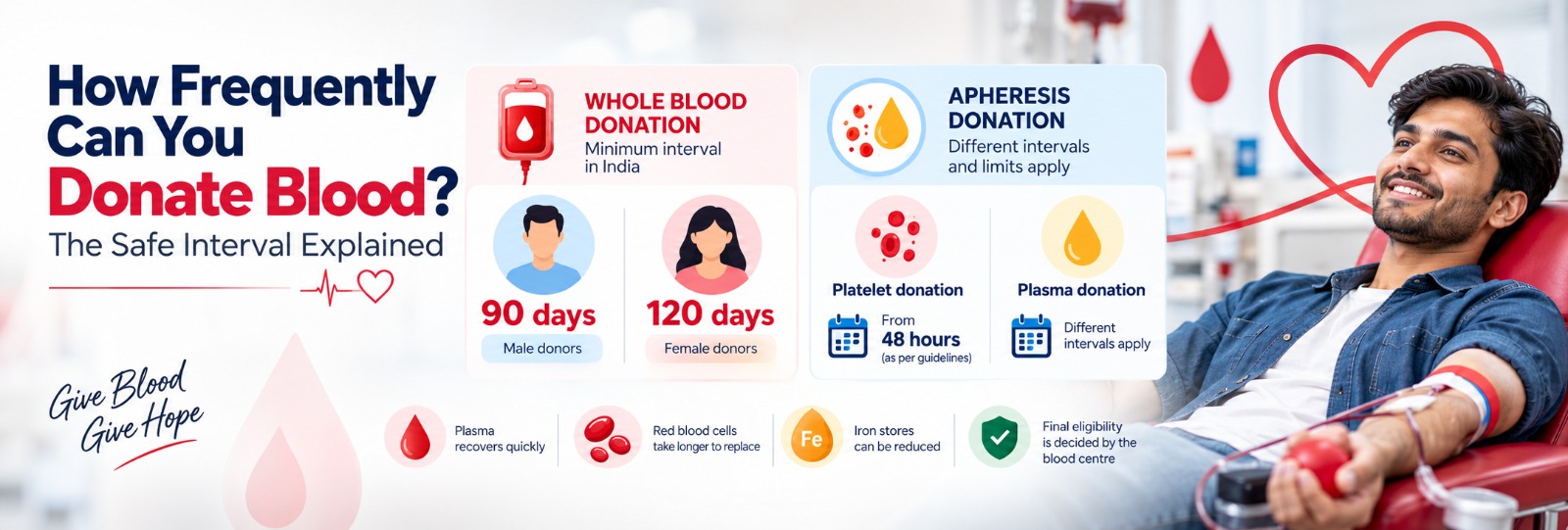
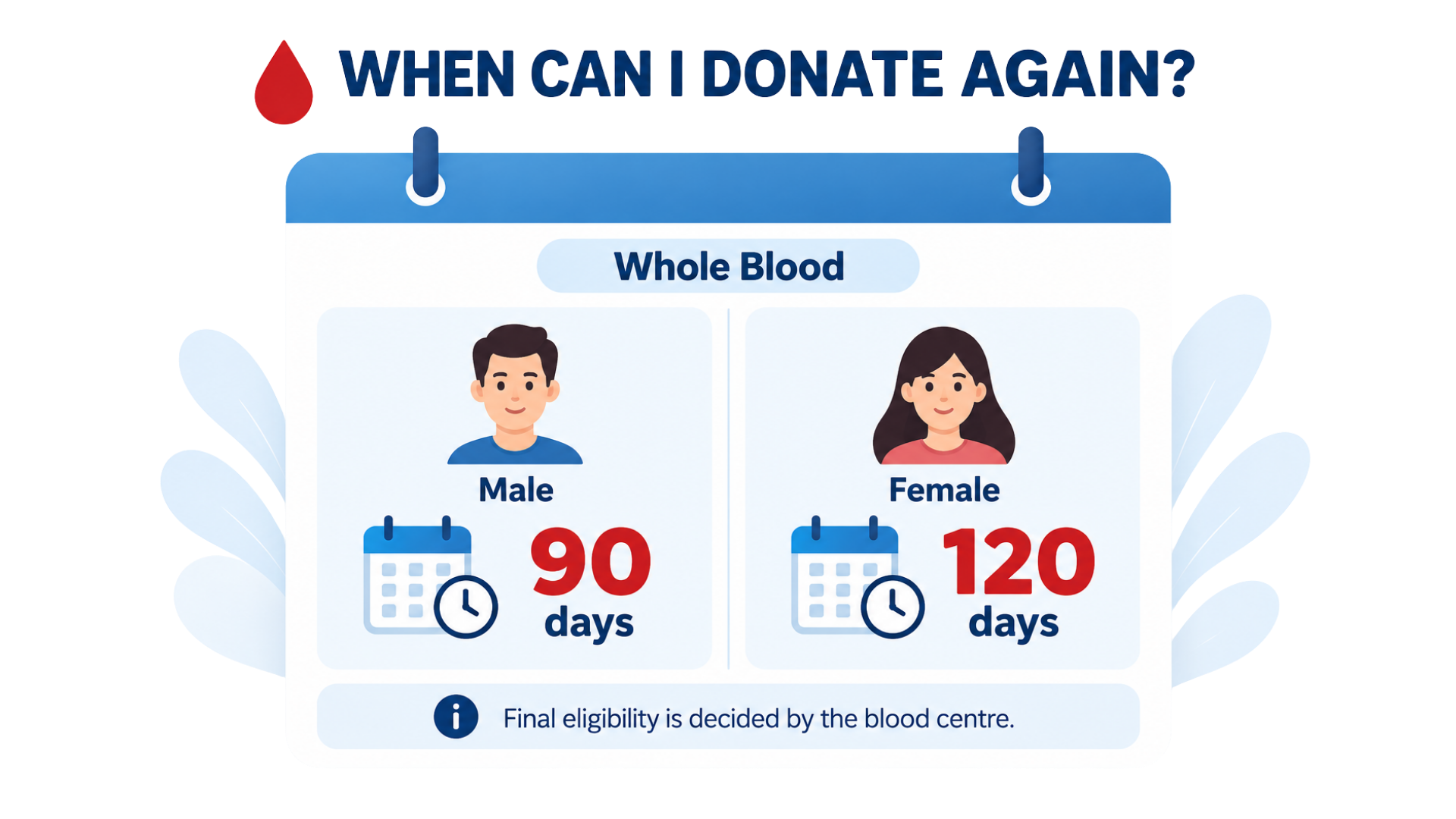
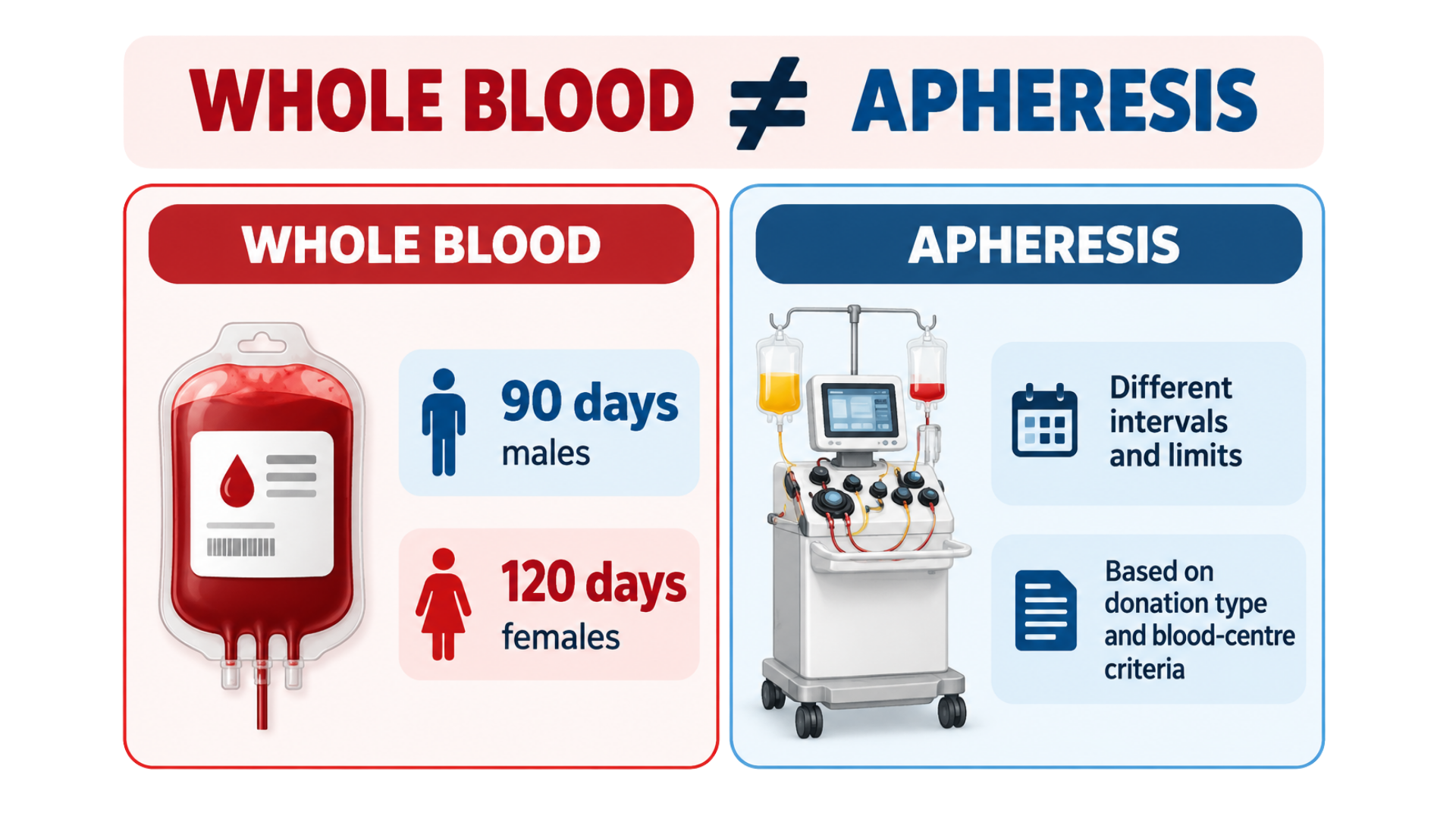
For whole-blood donation in India, the current standards specify an interval of 90 days for males and 120 days for females.
That interval isn't simply a calendar rule. It is part of a system designed to protect the donor while maintaining a safe blood supply.
How Often Can You Donate Whole Blood in India?
For whole-blood donation, India's blood-centre standards specify:
| Donor category | Minimum interval |
|---|---|
| Male donors | 90 days |
| Female donors | 120 days |
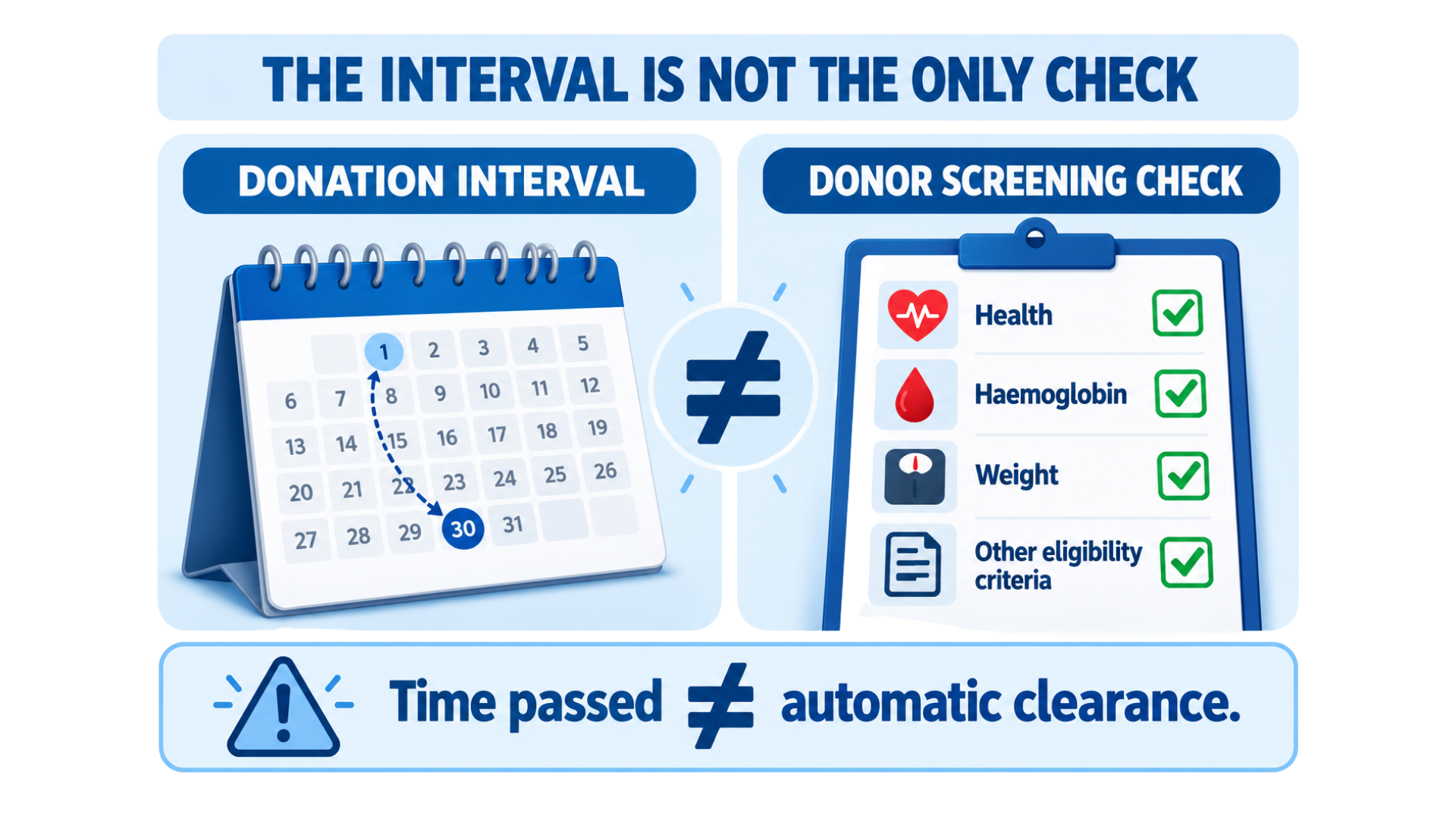
These are minimum intervals under the Indian standards, but meeting the time interval does not automatically mean you can donate that day. Blood centres also assess whether the donor meets the applicable health and eligibility requirements.
e-RaktKosh, India's Ministry of Health and Family Welfare blood-bank platform, also states that male donors can donate again after 90 days and female donors after 120 days.
Why Do You Have to Wait Between Donations?
Here is where a common misunderstanding starts.
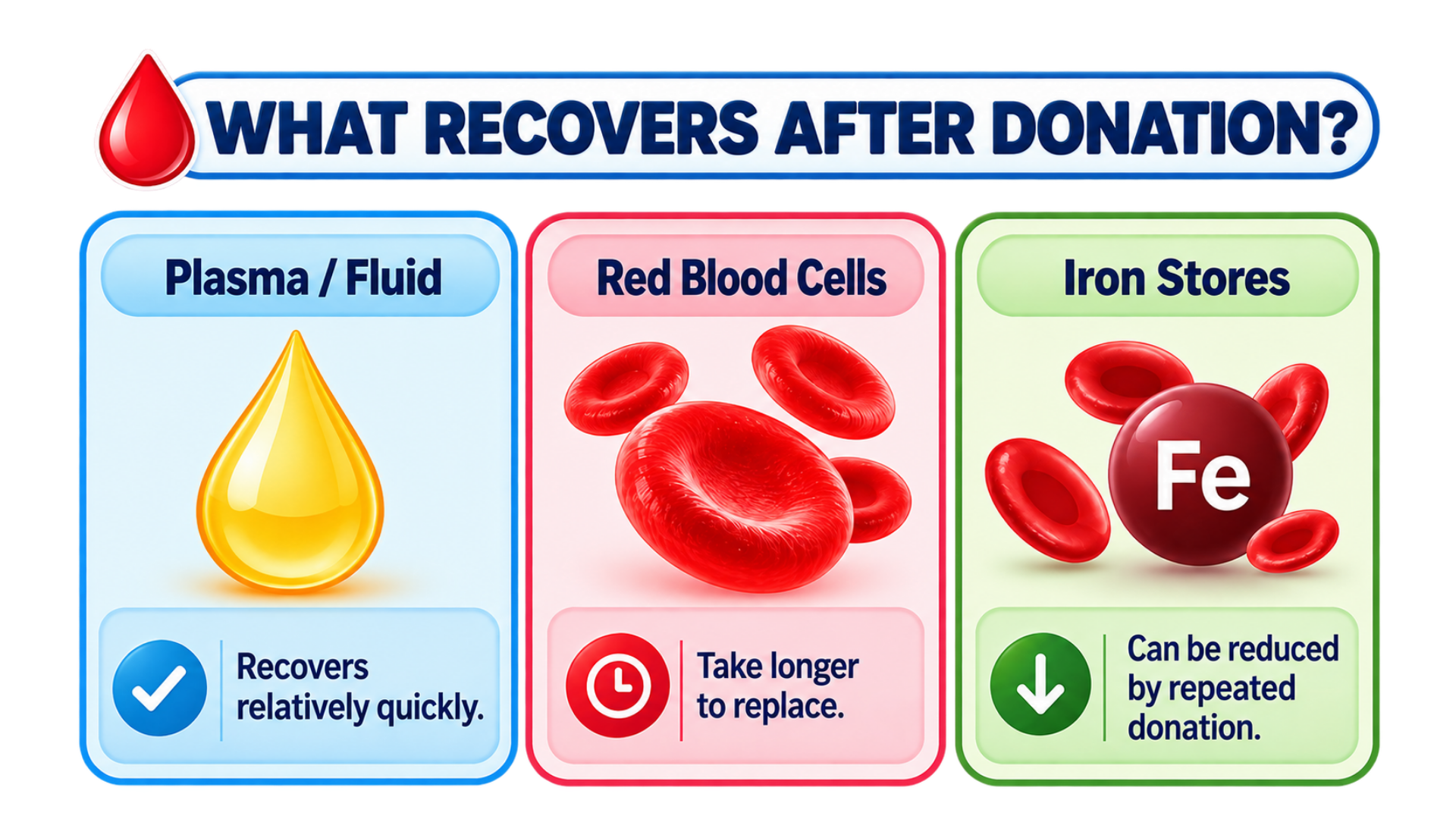
After donating blood, your body replaces the liquid portion of blood relatively quickly. But replacing the red blood cells and maintaining adequate iron stores takes longer. WHO guidance specifically highlights donor iron status and notes that repeated donations can contribute to iron depletion, with particular attention needed for younger donors and women of childbearing age.
So the fact that you feel normal a day or two after donation does not mean you are ready to donate whole blood again.
The waiting period gives the body time to recover before another whole-blood donation.
Does the Same Rule Apply to Every Type of Blood Donation?
No.
This is one of the most important details to understand.
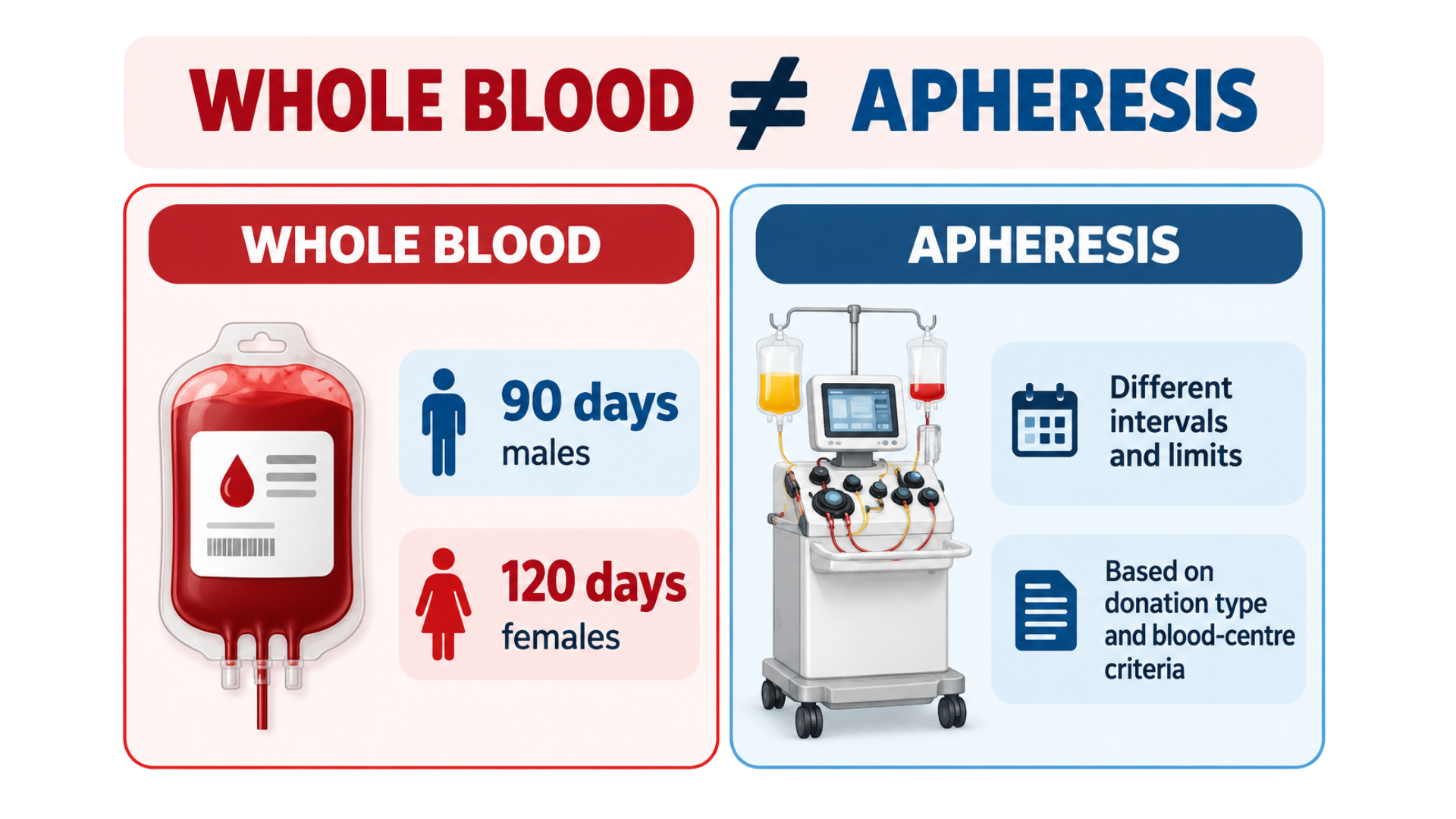
Whole blood donation and apheresis donation are not the same procedure.
During some apheresis donations, a machine separates particular blood components and returns other components to the donor. Because the process is different, the permitted donation intervals can also be different.
India's guidance allows certain platelet/plasma apheresis donations at shorter intervals, subject to specific limits and donor requirements. For example, single apheresis donation requires at least a 48-hour interval and is subject to limits on frequency; plateletpheresis also has additional rules around previous donations.
So don't take a whole-blood donation interval and apply it automatically to platelet or plasma donation.
What Determines Whether You Can Donate Again?
The calendar is only one part of the decision.
A blood centre may also assess your current health and donor eligibility. Indian standards include factors such as age, weight, haemoglobin, blood pressure, pulse and general wellbeing.
- Age
- Weight
- Haemoglobin
- Blood pressure
- Pulse
- General wellbeing
For example, the Indian standards list a minimum age of 18 years and a maximum age of 65 years, with additional conditions for first-time donors and apheresis donors. They also specify minimum haemoglobin and weight criteria for whole-blood donation.
This is why two people who donated on the same date may not necessarily be cleared to donate again under identical circumstances.
What If You Reach the Donation Date but Don't Feel Well?
Don't treat the minimum interval as an instruction to donate regardless of how you feel.
WHO says blood services should accept donors who are healthy and should defer donors when donating could put the donor or blood supply at risk.
India's donor standards also require assessment of wellbeing and other health factors before donation.
If you're unwell, taking certain medicines, recovering from a procedure or have another concern, tell the blood-centre staff rather than assuming your previous eligibility still applies.
Can Frequent Blood Donation Affect Iron Levels?
This deserves more attention than it usually gets.
Every whole-blood donation removes red blood cells, and iron is needed to make new haemoglobin and red blood cells. Repeated donation can therefore reduce iron stores in some donors. WHO specifically recommends considering donor iron status when determining donation frequency and notes the importance of longer intervals for some groups.
That doesn't mean regular blood donation is inherently unsafe for eligible donors.
It means frequency should be balanced with donor health, rather than treating the maximum permitted schedule as a target everyone should follow.
How Many Times Can You Donate Blood in a Year?
There is no single annual number that applies universally because the answer depends on the donation type and the applicable national rules.
For whole blood in India, the 90-day interval for males works out to a maximum calendar frequency based on that minimum interval, while the 120-day interval applies to females. But actual donation eligibility is still determined at each visit.
For apheresis donations, separate frequency limits apply. India's guidance, for example, sets specific limits for platelet/plasma apheresis rather than applying the whole-blood schedule.
The Simple Answer
So, how frequently can you donate blood?
For whole-blood donation in India, the recommended minimum interval is 90 days for males and 120 days for females.
But the date on your calendar is only the starting point.
Your next donation still depends on your health, donor screening, haemoglobin and other applicable eligibility criteria.
And when you're talking about platelet or plasma apheresis, the rules are different.
The safest approach is to follow the interval and eligibility criteria used by the blood centre where you donate.
Frequently Asked Questions
How frequently can I donate blood in India?
For whole-blood donation, India's standards specify at least 90 days between donations for males and 120 days for females. Eligibility is reassessed by the blood centre at each donation.
Can I donate blood every month?
Not for whole-blood donation under India's standard intervals. The minimum interval is 90 days for males and 120 days for females.
Can women donate blood as frequently as men?
Under India's whole-blood donation standards, the minimum interval is 120 days for females compared with 90 days for males.
Can I donate platelets more often than whole blood?
Apheresis donations have different rules from whole-blood donation. India's guidance permits certain platelet/plasma apheresis donations at shorter intervals, subject to specific limits and donor criteria.
Why is there a gap between blood donations?
The interval provides time for recovery after donation. Repeated blood donation can also affect iron stores, which is one reason donor health and donation frequency need to be considered together.
What if I have reached the required interval but feel unwell?
Tell the blood-centre staff. Meeting the time interval does not automatically make someone eligible to donate that day. Donor suitability is assessed at the time of donation.
Medical disclaimer
This article is for general educational purposes only and is not medical advice, diagnosis or treatment. Blood donation intervals and eligibility criteria can vary by country, donation type and individual circumstances. The final decision to accept a donor is made by the authorized blood centre after donor screening.