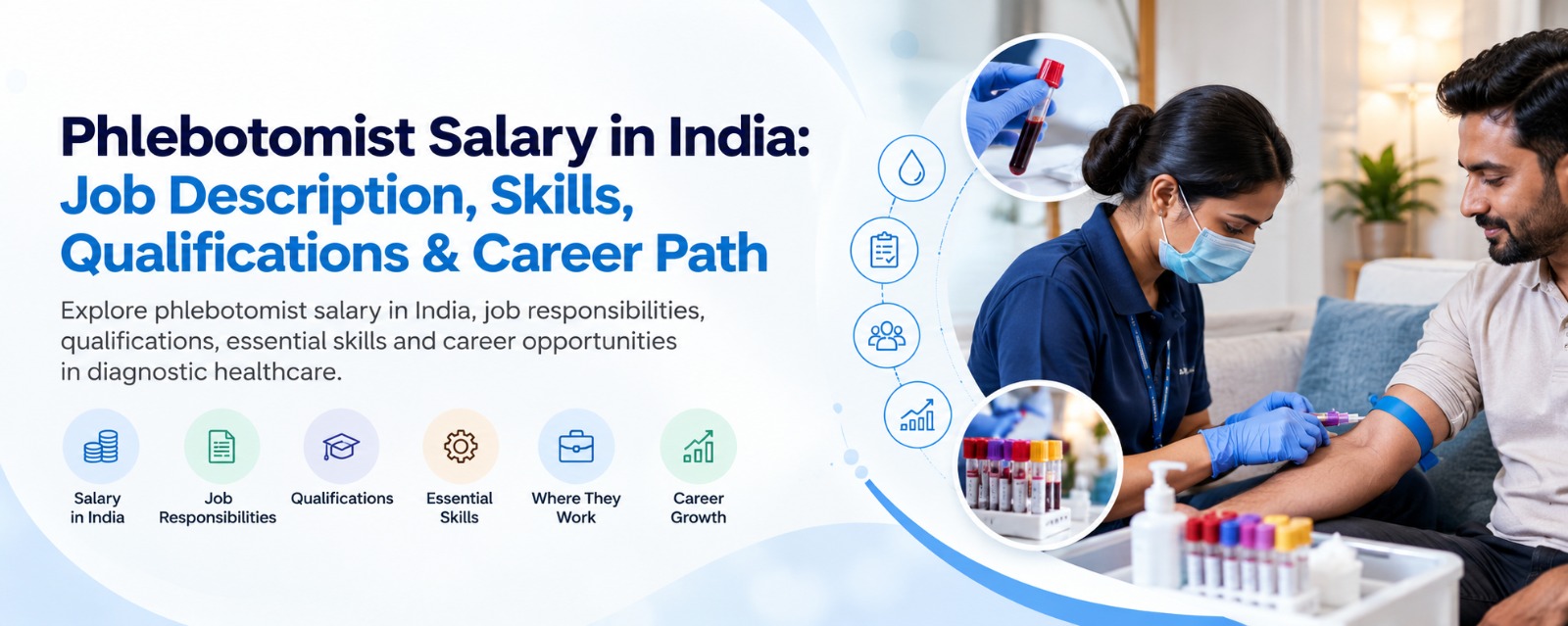
A healthcare career can begin with one skill that every diagnostic lab depends on: collecting a blood sample correctly.
Phlebotomists work at the point where patient care meets diagnostic testing. They collect blood samples, verify patient details, label specimens and help ensure samples are ready for laboratory processing.
But how much can a phlebotomist earn in India? What qualifications do employers look for, and which skills can help someone progress beyond an entry-level position?
This guide covers salary expectations, daily responsibilities, training, essential skills and career opportunities in diagnostic healthcare.
What Is the Salary of a Phlebotomist in India?
Phlebotomist salaries vary according to experience, location, employer and work setting. A position at a diagnostic laboratory may offer a different package from a home sample collection role involving daily travel.
Indeed's India salary page reported an average base salary of ₹16,368 per month, updated on 18 February 2026, based on 55 reported salaries. This is a reference point, not a guaranteed starting salary or a complete representation of every Indian job market.
When comparing job offers, look beyond the monthly salary. Travel reimbursement, incentives, overtime, working hours and other benefits can affect the overall value of a role.

What Factors Affect a Phlebotomist's Salary?
Experience
Practical experience and consistent collection practices can strengthen a candidate's profile.
Location
Salaries can differ between cities and local job markets.
Employer
Hospitals, diagnostic chains, standalone laboratories and home collection providers may offer different packages.
Technical skills
Blood collection, patient identification, documentation and infection prevention are important capabilities.
Travel and workload
Home collection roles may involve travel expenses, appointment schedules and additional responsibilities.
A useful tip for job seekers: Compare the fixed salary, incentives, travel costs and expected daily collection workload before accepting an offer.
What Does a Phlebotomist Do?
Imagine a phlebotomist arriving at a patient's home for a scheduled blood test. Before collecting the sample, they verify the patient's details, check the test request, explain the procedure and prepare the required equipment.
After collection, they label the specimen, record the necessary information and follow the prescribed handling and handover process.
The job involves much more than drawing blood.
Patient Verification → Equipment Preparation → Blood Collection → Sample Labelling → Documentation → Specimen Handling → Laboratory Handover
Typical responsibilities include:
- Verifying patient identity and requested tests.
- Preparing collection equipment and following infection-prevention procedures.
- Collecting blood samples using the appropriate technique.
- Labelling specimens accurately and maintaining records.
- Following specimen handling and packaging procedures.
- Reporting collection-related issues and coordinating with the relevant team.
The exact responsibilities depend on the employer. Some phlebotomists work in laboratories or collection centres, while others visit patients at home or collect specimens at healthcare facilities.
What Qualifications Are Required to Become a Phlebotomist?
There is no single qualification pathway that applies to every employer and training programme. Candidates should check the eligibility criteria for the specific course and job they are considering.
A relevant phlebotomy technician training programme may cover blood collection, patient interaction, infection prevention, specimen handling and documentation.
India's Healthcare Sector Skill Council lists a Phlebotomist qualification under job role code HSS/Q0501. Its qualification information describes responsibilities such as blood collection, specimen labelling, record keeping and checking supplies.
Before enrolling in a course, check:
- Entry-level educational requirements.
- Practical training and supervised clinical exposure.
- Recognition and current status of the qualification.
- Assessment and certification requirements.
- Coverage of patient safety and specimen handling.
Don't choose a course on duration or price alone. Practical training matters because employers need candidates who can perform collection procedures safely and consistently.
Essential Skills Every Phlebotomist Needs
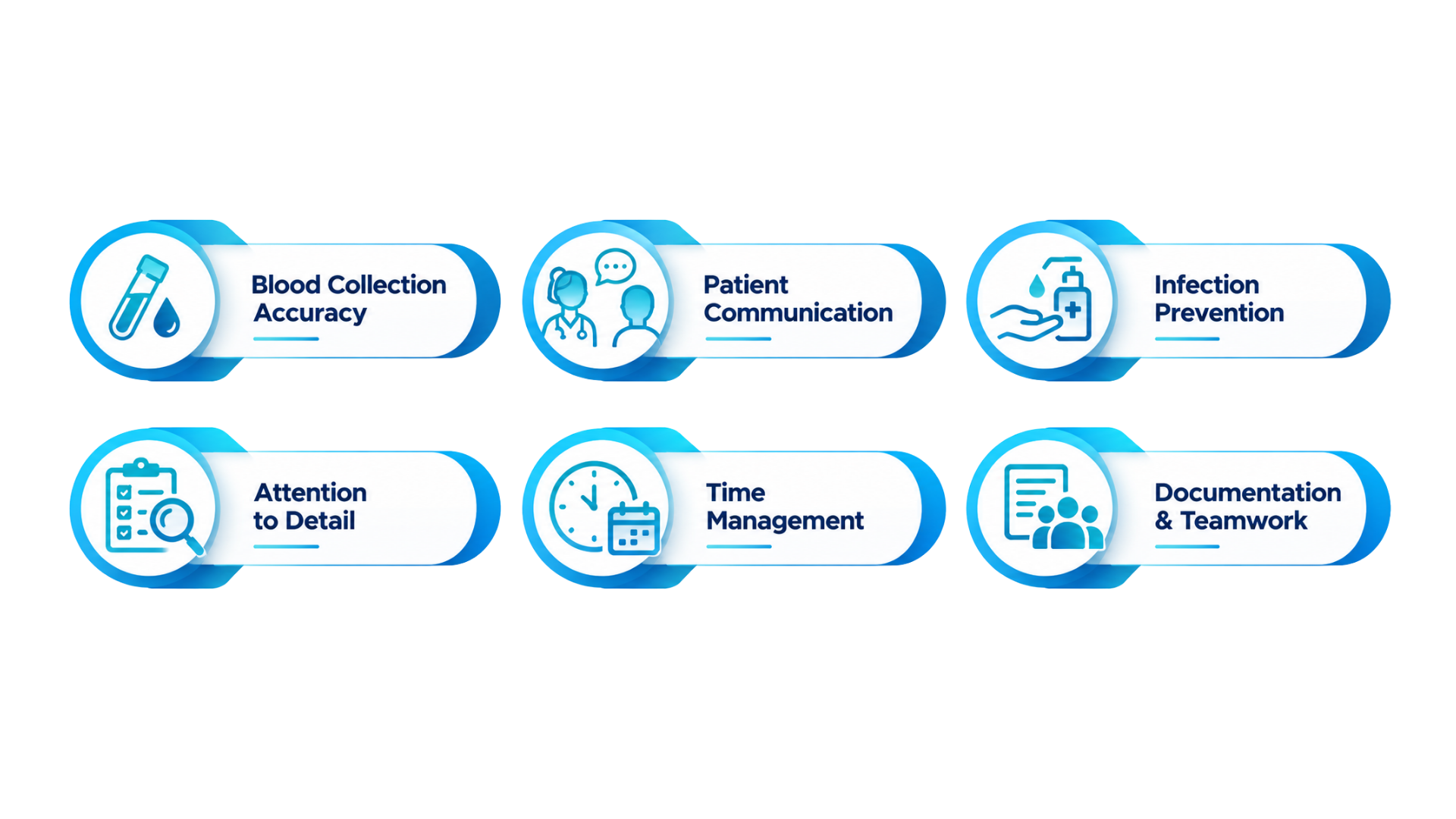
A technically correct blood draw is only one part of the job. Phlebotomists must also help patients feel comfortable, avoid identification errors and follow established procedures.
Technical accuracy
Using appropriate collection techniques and following test-specific procedures.
Attention to detail
Checking identifiers, labels and test requests before the specimen moves to the next stage.
Patient communication
Explaining the procedure clearly and responding calmly to concerns.
Infection prevention
Following hand hygiene, personal protective equipment and sharps-handling procedures.
Time management
Managing appointments without skipping essential safety checks.
Documentation and teamwork
Recording required information and communicating collection issues to the appropriate team.
For home collection roles, punctuality, route planning and professional conduct matter too. A missed appointment can disrupt both the patient's schedule and the laboratory's collection workflow.
Where Can Phlebotomists Work in India?
Phlebotomists can explore opportunities in several healthcare settings, depending on their training and the employer's requirements.
- Diagnostic laboratories and pathology labs.
- Hospitals and healthcare centres.
- Diagnostic collection centres.
- Home sample collection services.
- Healthcare organisations coordinating collection operations.
Home collection differs from a fixed laboratory role. The phlebotomist must travel to the patient, carry the required supplies, follow identification and collection procedures, and ensure the specimen enters the appropriate transport workflow.
That means the job combines patient interaction with coordination across the diagnostic sample journey.
| Work setting | Typical focus |
|---|---|
| Diagnostic Laboratory | Collection and laboratory coordination |
| Hospital | Patient care and collection |
| Collection Centre | Sample collection services |
| Home Collection | Patient visits, appointments and handover |
Career Growth — What Can a Phlebotomist Do Next?
Career progression depends on experience, additional training, employer requirements and available vacancies. Possible directions include senior phlebotomist, collection team supervisor, phlebotomy trainer or collection operations coordinator.
Phlebotomist → Senior Phlebotomist → Collection Team Supervisor → Collection Operations Coordinator
Some professionals also pursue further education in medical laboratory technology or related healthcare fields, subject to the relevant entry requirements.
To strengthen career prospects, focus on accurate collection, patient communication, safe working practices and reliable documentation. These skills can help demonstrate readiness for roles with greater responsibility.
How Phlebotomy Connects With Healthcare Logistics
Collecting a specimen is only the beginning of its journey. After collection, the sample may need to be labelled, packaged, picked up, transported and handed over to the laboratory under defined conditions.
Patient → Phlebotomist → Sample Handover → Transport Network → Laboratory
Phlebotomists therefore work within a wider diagnostic process involving collection teams, laboratories and healthcare logistics operations.
When collection and transportation procedures are coordinated effectively, laboratories can receive specimens with clearer documentation and traceability. Each team has its own responsibilities, but reliable handovers help the overall workflow run more smoothly.
At C3 Logistics, healthcare logistics services support diagnostic sample movement and home collection operations. For organisations coordinating these services, the connection between collection quality and transportation procedures is an important operational consideration.
Frequently Asked Questions
What is the monthly salary of a phlebotomist in India?
Salary varies by experience, city, employer and work setting. Indeed reported an average base salary of ₹16,368 per month on 18 February 2026, based on 55 reported salaries. Check current local vacancies before making a career or salary decision.
Is a phlebotomy course required to become a phlebotomist?
Employers may have different eligibility requirements. Relevant practical training and recognised qualifications can help candidates demonstrate the skills needed for the role.
Can a phlebotomist collect blood samples at home?
Yes. Home sample collection is a common work setting where an employer provides the service and the worker meets its requirements. The role also involves appointment coordination, patient identification, documentation and appropriate specimen handover.
What skills are most important for a phlebotomist?
Accurate blood collection, patient communication, infection prevention, correct labelling, attention to detail and documentation are central to the role.
Where can phlebotomists find jobs in India?
Candidates can check diagnostic laboratories, hospitals, collection centres and home sample collection providers. Review each vacancy's qualification, experience, location and travel requirements.
Final Takeaway
Phlebotomy offers a route into diagnostic healthcare for people willing to develop practical collection skills and follow established safety procedures. Salary matters, but training quality, working conditions and opportunities to build experience deserve attention too.
Understanding how sample collection connects with laboratory processing and specimen transportation also helps candidates see the wider role they play in diagnostic services.