
A blood sample can reach a laboratory perfectly on time and still have a problem that started long before the analyser ever sees it.
The patient may not have followed the required preparation. The wrong tube may have been selected. A sample may have been poorly labelled, exposed to unsuitable conditions, or delayed during transportation.
These events belong to the pre-analytical phase of laboratory testing.
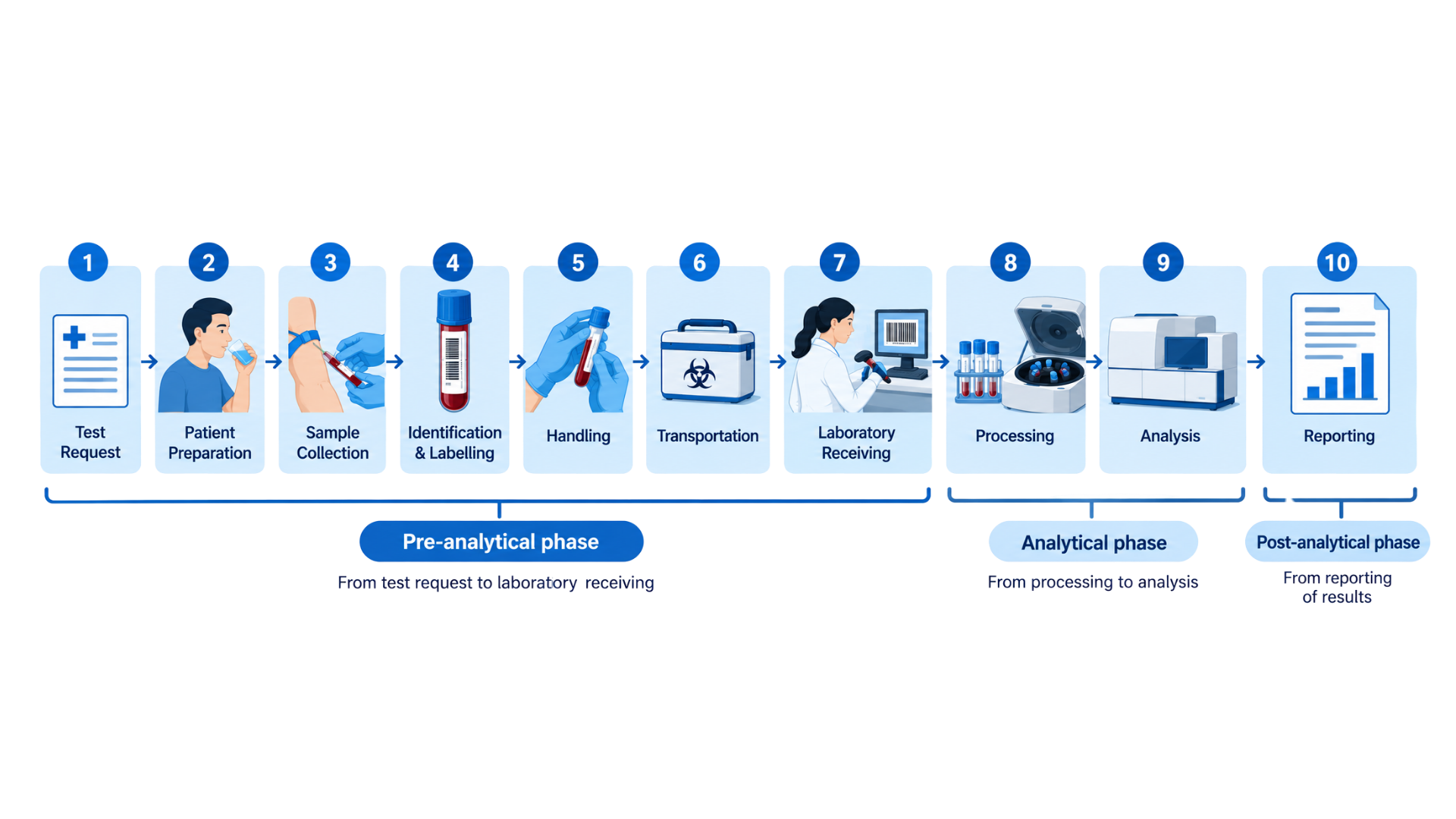
It is the part of the diagnostic process that happens before the actual testing begins, and it includes far more than simply drawing blood. Patient preparation, test requests, identification, collection, labelling, handling, transportation, processing and storage can all influence what eventually reaches the analyser.
That is why understanding pre-analytics matters. A laboratory cannot correct every problem with better equipment if the specimen arriving at the analyser is already compromised.
What Is the Pre-Analytical Phase?
In simple terms, the pre-analytical phase covers the steps that happen before a specimen is ready for analysis.
Depending on the laboratory workflow, it can begin with requesting the right test and preparing the patient, then continue through collection, identification, handling, transportation and specimen preparation.
Think about a blood test as a journey:
Test Request → Patient Preparation → Identification → Collection → Labelling → Packaging → Transportation → Laboratory Receiving → Processing → Analysis
The analyser is only one part of this chain.
A useful distinction is that some pre-analytical activities happen inside the laboratory, while others take place outside it. A home collection, for example, may involve a phlebotomist, patient, collection coordinator and transport team before the sample reaches laboratory staff. Research has highlighted these extra-laboratory steps as important sources of pre-analytical risk.
Why Does the Pre-Analytical Phase Matter?
The laboratory may perform the analytical test correctly, but the result can still be affected if the specimen was unsuitable when it arrived.
Common pre-analytical problems include patient misidentification, incorrect tubes, insufficient samples, haemolysis, clotting, labelling mistakes, inappropriate handling, and unsuitable transportation or storage.
Consider a simple example.
A blood sample is collected correctly but spends too long in unsuitable transport conditions. The laboratory receives it and performs the test exactly according to procedure.
The analytical process may be sound. The problem is that the specimen's journey before analysis was not.
This is why laboratory quality needs to look at the whole testing pathway, not only what happens inside the testing section.
Where Can Pre-Analytical Errors Occur?
Patient Preparation
Some tests require specific preparation. If the patient receives unclear instructions or does not follow the laboratory's preparation requirements, the specimen may not represent the intended testing conditions.
The practical lesson is straightforward: patient preparation instructions should be clear, test-specific and communicated before collection.
Patient Identification
A correctly collected sample is of little value if it is linked to the wrong patient.
Identification procedures should connect the patient, test request and specimen before the sample enters the laboratory workflow.
WHO guidance on blood collection emphasizes patient identification, specimen labelling and documentation as important parts of safe and quality-focused phlebotomy.
Sample Collection
Collection technique can influence specimen quality.
Problems may include improper collection, inadequate volume, clotting, contamination or haemolysis. The appropriate collection method and tube depend on the examination being performed.
This is why trained collection personnel should follow the laboratory's documented procedures rather than treating every blood draw as identical.
Labelling
Labelling is a small step with a large consequence.
If identification is missing, unclear or incorrect, the laboratory may need to investigate or reject the specimen rather than risk reporting a result against the wrong patient.
Barcode systems can improve traceability, but they still depend on correct patient identification and collection procedures.
Handling and Processing
What happens to a sample after collection matters too.
Centrifugation, separation, aliquoting, storage and other preparation steps need to follow the laboratory's requirements for the particular specimen.
A sample does not remain unchanged simply because it is sitting inside a tube.
How Does Transportation Become a Pre-Analytical Issue?
This is where laboratory quality and healthcare logistics meet.
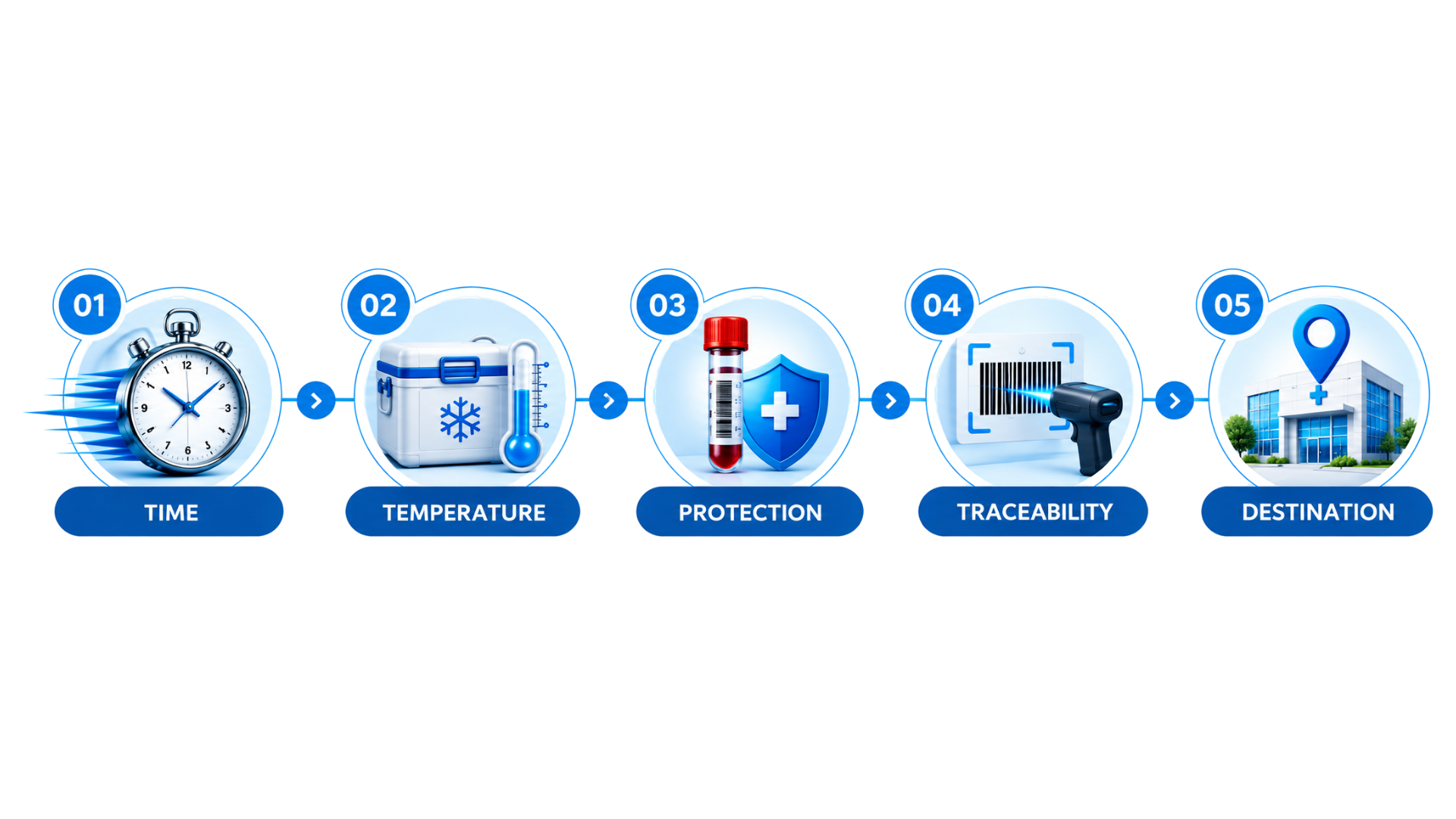
Once a sample leaves a collection location, its journey is not finished. Time, temperature, handling, packaging and storage conditions can affect specimen integrity, depending on the test and specimen type.
Research on sample transportation describes it as an important part of the pre-analytical pathway and highlights the need for planning, quality control and monitoring.
For laboratories receiving samples from homes, clinics or collection centres, transportation may involve:
- Pickup scheduling
- Route planning
- Appropriate packaging
- Defined transport conditions
- Handover procedures
- Sample tracking
- Laboratory receiving checks
The fastest route is not automatically the best route.
The objective is to deliver the specimen within the laboratory's defined requirements while preserving its integrity and traceability.
What Happens When a Sample Does Not Meet Requirements?
Not every unsuitable specimen should simply be tested because a patient has already undergone collection.
Laboratories typically establish specimen acceptance and rejection criteria based on the test and their quality procedures.
A specimen may require review when there is a problem with identification, container, volume, integrity, transport conditions or other defined requirements.
This can lead to recollection, additional investigation or other action according to the laboratory's procedure.
For the patient
Recollection can mean another appointment, another needle stick and a delayed result.
For the healthcare provider
It can mean waiting longer for information needed for clinical decisions.
For the laboratory
Repeated rejection can indicate that something upstream in the process needs attention.
How Can Pre-Analytical Errors Be Reduced?
There is no single fix because pre-analytical errors can occur at several points.
A stronger approach is to build controls throughout the entire pathway.
Standardise Collection Procedures
Use documented procedures for patient preparation, identification, collection, labelling and specimen handling.
Train the People Involved
Phlebotomists, collection staff, laboratory teams and transport personnel need to understand the part they play in maintaining specimen quality.
Monitor Rejection and Error Patterns
Do not treat every rejected sample as an isolated incident.
If the same problem keeps appearing, investigate its source. Quality indicators and systematic error recording can help laboratories identify recurring weaknesses.
Define Transportation Requirements
The laboratory should establish appropriate requirements for specimen packaging, timing, storage and transportation rather than leaving these decisions to individual staff members.
Keep Traceability Intact
The sample should remain linked to the patient and test request throughout its journey.
Why Pre-Analytics Matters for Growing Diagnostic Networks
A single laboratory with one collection point may have relatively simple sample movement.
The process becomes more complicated when samples start coming from multiple clinics, home collection appointments or satellite collection centres.
More locations mean more handovers, routes, timings and opportunities for variation.
This is where healthcare logistics becomes more than a delivery function. The transportation process needs to fit into the laboratory's quality system.
For C3 Logistics, this is the relevant connection: when diagnostic samples need to move between healthcare locations and laboratories, organised medical sample transportation can form an important link in the wider pre-analytical chain.
The logistics provider is not performing the laboratory test. Its role is to support the controlled movement of the specimen according to the requirements defined by the healthcare or laboratory operation.
A Practical Pre-Analytical Checklist
Before considering the process complete, ask:
| Stage | Question |
|---|---|
| Request | Is the correct test requested? |
| Patient | Has the patient been correctly identified and prepared? |
| Collection | Was the appropriate specimen collected? |
| Labelling | Is the specimen clearly traceable? |
| Handling | Was it handled according to laboratory requirements? |
| Transport | Did it move under the required conditions? |
| Receiving | Does it meet acceptance criteria? |
| Processing | Was it prepared correctly before analysis? |
The value of this checklist is not in creating more paperwork. It is in making the invisible parts of laboratory quality visible.
Final Takeaway
The pre-analytical phase is everything that needs to happen before a specimen is ready for analysis, and many of its most important steps happen outside the analyser room.
Patient preparation, identification, collection, labelling, handling and transportation can all influence whether a specimen arrives in a condition suitable for testing.
For diagnostic networks that collect samples away from the main laboratory, transportation deserves particular attention. A reliable sample journey is not simply about speed. It is about maintaining the conditions, identity and traceability required from collection to laboratory receiving.
The better question is not just, “Can we get the sample to the laboratory?”
It is:
“Can we get the right sample, from the right patient, to the right laboratory, in the right condition?”That is the real purpose of managing the pre-analytical phase well.
If your diagnostic operation collects samples from homes, clinics or multiple collection centres, the transportation process is part of the wider pre-analytical journey. C3 Logistics can support healthcare organisations with medical sample transportation requirements where specimens need to move between healthcare locations and laboratories under defined operational conditions.
Frequently Asked Questions
What is the pre-analytical phase in laboratory testing?
It is the stage before laboratory analysis, covering activities such as test requesting, patient preparation, specimen collection, identification, labelling, handling, transportation and preparation.
What are common pre-analytical errors?
Common examples include patient identification errors, incorrect collection tubes, insufficient samples, haemolysis, clotting, labelling problems and unsuitable handling or transportation.
Why is blood sample transportation part of pre-analytics?
Transportation happens before the specimen reaches the analytical stage. Time, temperature and handling conditions can affect specimen integrity depending on the sample and test.
Can a laboratory reject a blood sample because of a pre-analytical error?
Yes. If a specimen does not meet the laboratory's defined acceptance requirements, it may be rejected or require further action according to the laboratory's procedure.
Who is responsible for preventing pre-analytical errors?
Responsibility is shared across the testing pathway. Patient preparation, collection staff, laboratory personnel and transportation teams can all influence specimen quality.
How can laboratories reduce pre-analytical errors?
Standardised procedures, staff training, traceability, error monitoring, defined specimen requirements and controlled transportation processes can help reduce recurring problems.